
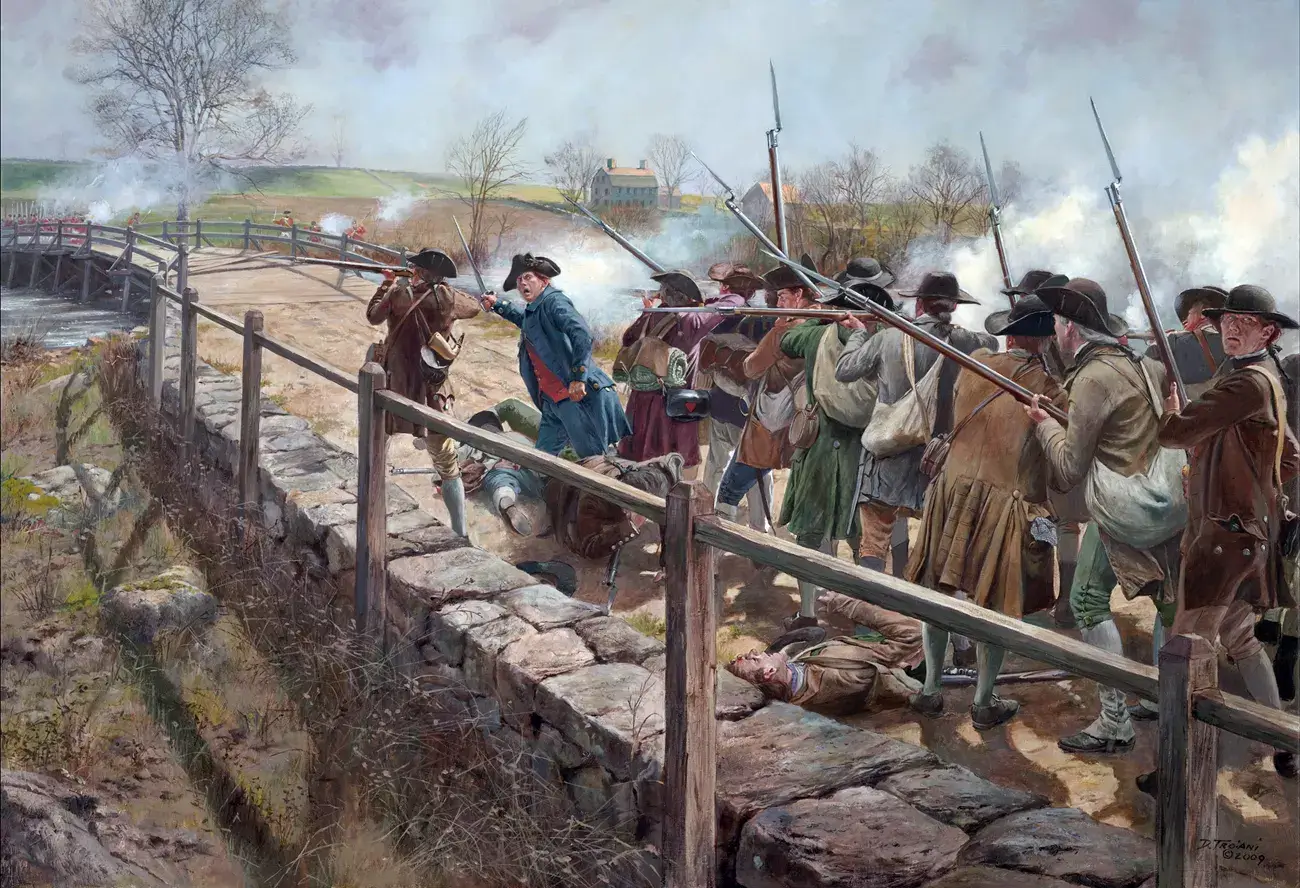
Battle of Concord: The Turning Point in Revolutionary History
The Significance and Impact of the Battle of Concord in the American Revolution
Battle of Concord: A Detailed Overview
On April 19, 1775, in Concord, Massachusetts, American militiamen clashed with British troops in one of the earliest significant engagements of the American Revolutionary War. Tensions between the colonies and Great Britain had been rising for years, fueled by protests against taxes and increasingly strict regulations. The colonial forces, militiamen, had been alerted that a British column was coming to seize a hidden cache of weapons. Determined to protect their supplies and assert their rights, these local militias met the British head-on in a confrontation that would spark a much larger conflict, and change the history of the United States.
Key Moments of the Battle
- Battle of Lexington With Paul Revere’s Ride on April 18th, 1775, warning the people of Lexington, and trying to reach the people of Concord. Prior to reaching Concord, British troops marched into Lexington, and encountered colonial militia in Lexington. Although the British initially prevailed and forced the militiamen to disperse, the event alerted surrounding communities that armed conflict had begun.
- Stand at the North Bridge: In Concord, determined Minutemen engaged the British near the North Bridge. This action, often cited alongside the “shot heard ’round the world,” saw the colonial forces successfully push the British back, proving that local militias could stand against a well-trained military.
- Retreat to Boston: As the British retreated, colonial fighters from multiple towns pressed them the entire route back to Boston. Ambushes and guerilla tactics inflicted further losses on the British, revealing the colonists’ resolve and their adeptness at defending local terrain.
Immediate Aftermath and Significance
The events in Concord demonstrated that the colonists would not be intimidated by a professional army, shifting the struggle from a series of protests to a full-scale revolution. News of these battles quickly spread throughout the colonies, fueling widespread support for armed resistance. Many historians, including those cited by Encyclopedia Britannica, view the engagements at Lexington and Concord as the pivotal spark that ignited the American Revolution.
Long-Term Influence
- Unity Among Colonies: These early confrontations helped bind the colonies together under a common goal—to secure liberty and self-governance.
- Heightened Resolve: Accounts of ordinary farmers and tradespeople confronting British troops underscored the power of popular uprising, inspiring many others to join.
- Myth and Memory: The “shot heard ’round the world” became an iconic expression of America’s fight for independence, symbolizing how a single event can reshape the course of history.
Visiting Historical Sites
Modern visitors can explore the Minute Man National Historical Park to walk in the footsteps of the Minutemen, view the North Bridge, and learn about the personal stories of those who fought. Park guides and museum exhibits provide deeper context on how these early battles laid the foundation for a new nation.
Frequently Asked Questions (FAQ)
- Why is it called the “shot heard ’round the world”?
Ralph Waldo Emerson coined the phrase in his poem Concord Hymn, referring to how the opening shots of the American Revolution quickly became a global symbol of the fight for independence. While there is still debate over whether the first shot occurred in Lexington or Concord, it symbolically represents the beginning of a conflict that changed world history. - What were the Minutemen?
Minutemen were colonial militia volunteers who could be ready for action “in a minute’s notice.” They were typically local farmers, tradesmen, and ordinary citizens. Their rapid response at Concord demonstrated both the preparedness and determination of the colonists. - Did the colonists win the Battle of Concord?
Yes. Although the British initially attempted to seize colonial supplies and gained a temporary advantage in Lexington, the colonists successfully defended Concord and ultimately forced the British to retreat back to Boston. This victory boosted morale and helped unite the colonies. - Where can I learn more or visit historic sites?
The Minute Man National Historical Park preserves many of the sites related to the Battles of Lexington and Concord. At the park, you can walk the Battle Road Trail, see the North Bridge, and learn about the experiences of local families and militiamen who played crucial roles in 1775. There is also the Concord Museum, which is home to Paul Revere’s Lantern, and has an amazing exhibit about the Battle of Concord. The Old Manse, home to William Emerson in 1775, Ralph Waldo Emerson’s grandparents, was a witness house to the battle. You can feel the “Revolutionary Rush”when looking out the bedroom windows.
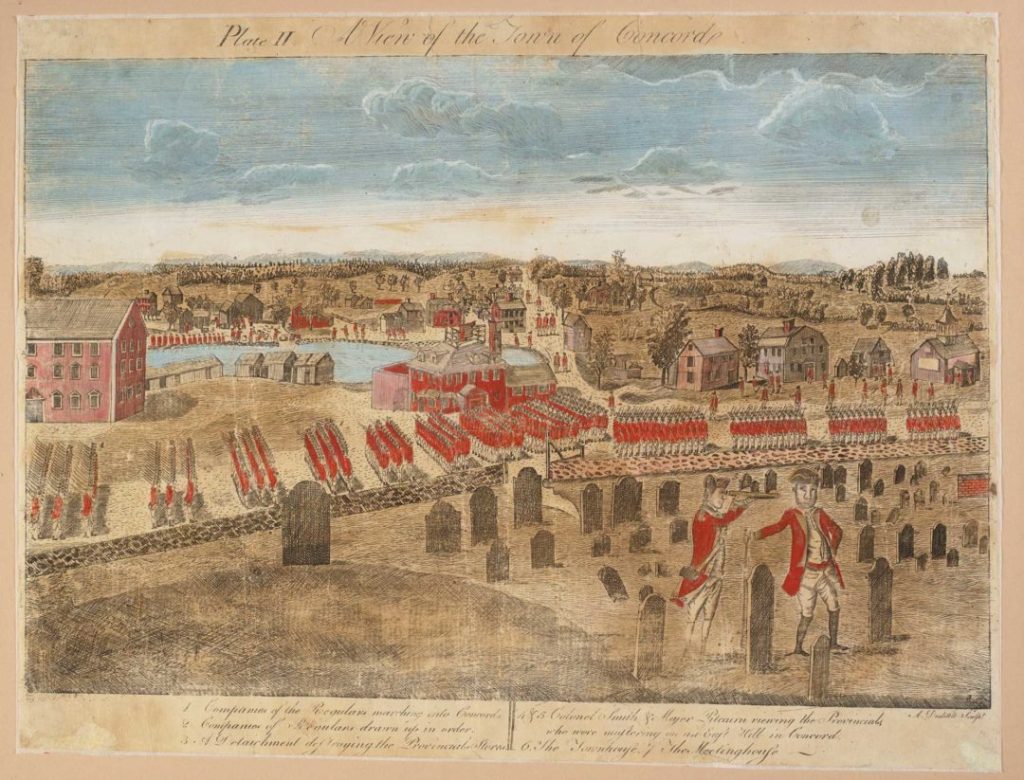
This is one of the Amos Doolittle engravings. He was known as the Revere of Connecticut, and his series is one of the only primary source images we have of the Battles of Lexington and Concord.