
American Independence and LGBT+ Rights: Similar Starts
Both the Stonewall Riots and the Battle of Lexington symbolize pivotal moments in the fight for rights and freedom, embodying the spirit of rebellion against oppression. These historic events, though separated by nearly two centuries, share an underlying theme of resistance and the quest for justice.
55 years ago, on June 28, 1969, a police raid on the Stonewall Inn in New York City ignited days of protests, catalyzing the modern LGBTQ+ movement. The Stonewall Inn, a refuge for the marginalized LGBTQ+ community, became the epicenter of a profound shift. The raid triggered an explosive reaction, with individuals—many of whom were transgender people and people of color—fighting back against years of systemic abuse and discrimination.
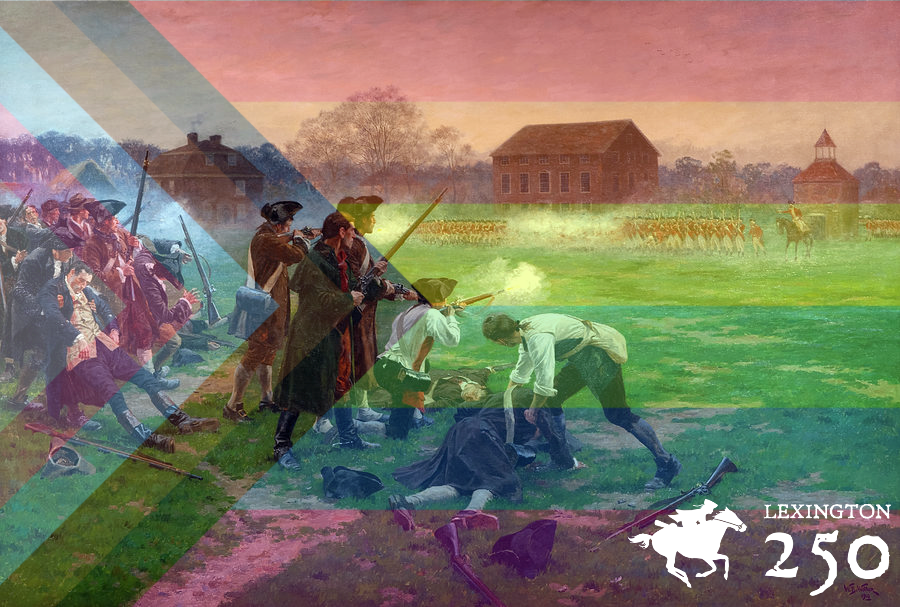
249 years ago April 19, 1775, in Lexington, Massachusetts, colonial militia clashed with British troops, sparking the American Revolutionary War. This confrontation marked the beginning of the colonies’ struggle for independence from British rule. Early in the morning, the Minutemen faced the well-trained British soldiers on the Lexington Green. The first shot, whose origin remains unknown, set off a series of events that would lead to the birth of a new nation.
What’s remarkable about Stonewall is that no one knows who threw the first brick, just as the Battle of Lexington’s first shot, famously dubbed “the shot heard ’round the world,” remains anonymous. This ambiguity highlights the collective nature of these uprisings—movements driven by a unified call for justice rather than individual heroics.
Common Threads
Despite differing contexts, both events share common themes:
– Catalyst for Change: Both were sparked by immediate acts of oppression—Stonewall by a police raid and Lexington by an attempt to seize colonial arms.
– Safe Havens: The Stonewall Inn and Buckman Tavern served as critical safe places for planning and organizing the resistance.
– Grassroots Mobilization: Each event saw significant community involvement and resistance. The Stonewall Riots mobilized the LGBTQ+ community, leading to annual Pride marches and significant legal advancements. The Battle of Lexington united the colonies in their fight for independence.
– Legacy of Empowerment: Both events inspired sustained movements. Stonewall became the cornerstone of LGBTQ+ rights, while Lexington heralded the American Revolution and the fight for self-governance.
Catalyst for Change
Both the Stonewall Riots and the Battle of Lexington were sparked by immediate acts of oppression. At Stonewall, a police raid intended to suppress a marginalized community triggered a defiant response, leading to a broader movement for LGBTQ+ rights. Similarly, the Battle of Lexington was prompted by British troops attempting to confiscate colonial weapons, which led to the first military engagements of the American Revolution. These catalysts highlight how acts of oppression can ignite powerful movements for change.
Safe Havens
The Stonewall Inn and Buckman Tavern were both critical safe places for planning and organizing resistance. The Stonewall Inn provided a sanctuary for LGBTQ+ individuals, allowing them to gather, find community, and ultimately mobilize against police brutality. Buckman Tavern served a similar purpose for the colonial militia, offering a place for Minutemen to convene and prepare for the confrontation with British forces. These safe havens were instrumental in the organization and execution of their respective movements.
Grassroots Mobilization
Both events saw significant community involvement and grassroots mobilization. Following the Stonewall Riots, the LGBTQ+ community came together to form organizations, advocate for rights, and establish annual Pride marches that continue to this day. The Battle of Lexington united the colonies in their fight for independence, with local militias banding together to resist British rule and support the revolutionary cause. This grassroots mobilization was essential in sustaining the momentum of each movement.
Contributions of Women
Trans Women of Color at Stonewall:
-Marsha P. Johnson and Sylvia Rivera were prominent figures in the Stonewall Riots. Their bravery and leadership were pivotal in the protests and in the subsequent LGBTQ+ rights movement.
– These women faced multiple layers of discrimination yet stood at the forefront of the fight for equality, advocating not only for LGBTQ+ rights but also for the rights of those most marginalized within the community.
Women in the American Revolution
– Women played crucial roles during the American Revolution, both on and off the battlefield. Figures like Dolly Hancock and Abigail Adams , advocated for women’s rights and independence, provided intellectual and moral support.
– Women, like Anna Harrington in Lexington, also engaged in boycotts of British goods, produced homemade items to support the war effort, and even took up arms in some cases, exemplifying the same spirit of resistance seen at Stonewall.
Legacy of Empowerment
The legacies of the Stonewall Riots and the Battle of Lexington are marked by their lasting impact on their respective movements. The Stonewall Riots are celebrated as the beginning of the LGBTQ+ rights movement in the United States, leading to significant social and legal advancements. The Battle of Lexington is remembered as the starting point of the American Revolution, symbolizing the fight for independence and self-governance. Both events continue to inspire new generations to stand up for their rights and challenge oppression.
Ongoing Importance Today
Both the Stonewall Riots and the Battle of Lexington hold enduring importance today. They remind us of the power of collective action and the necessity of standing up against oppression. The legacy of the Stonewall Riots continues to shape the fight for LGBTQ+ rights, influencing contemporary social and legal landscapes. Pride marches and advocacy for equality trace their roots back to that fateful night in 1969.
Similarly, the spirit of the Battle of Lexington lives on in the principles of American democracy and independence. The willingness to resist tyranny and fight for self-governance is a cornerstone of the American identity, influencing both national and global movements for freedom.
The Stonewall Riots and the Battle of Lexington serve as powerful reminders of the enduring fight for rights and freedom. They highlight the importance of collective action, safe havens, and grassroots mobilization in achieving significant social change. The contributions of trans women of color at Stonewall and women in the American Revolution exemplify the vital roles played by marginalized groups in these movements. As we reflect on these historic events, we are reminded of the ongoing struggle for justice and the need to continue advocating for the rights of all individuals.
Happy Pride! To get the latest updates from us, join our Discord server here. If you wanted to show your pride and spread a positive message, check out our History is for Everyone shirt here.
Thanks for reading!

Sabrina Bhattacharjya