
Paul Revere: The Midnight Rider of the American Revolution
A Closer Look at the Man Behind the Historic Ride
Introduction
Paul Revere was a key figure in the American Revolution, best known for his daring “Midnight Ride” to warn fellow patriots of oncoming British forces (Minuteman National Historical Park 1). While his ride from Boston to Lexington is the highlight of many history books, the folk hero also played other pivotal roles—organizing intelligence networks, creating influential engravings, and shaping public opinion about British rule. His actions contributed significantly to the opening chapter of America’s fight for independence.
Early Life and Background
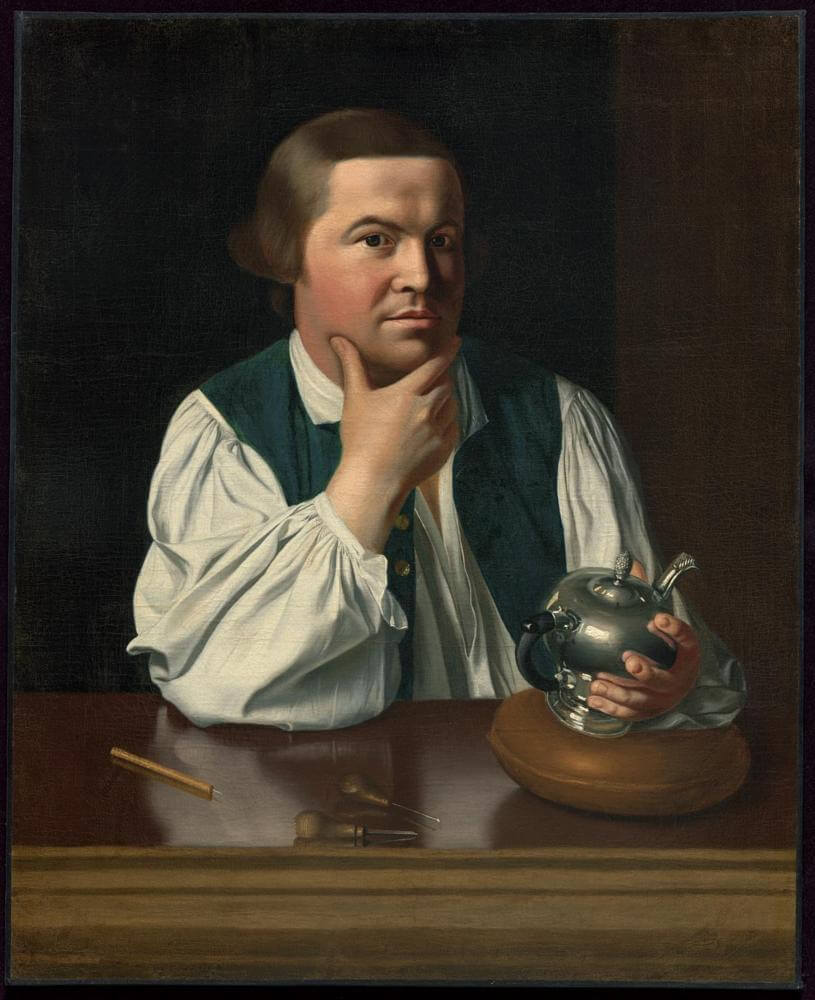
Born on January 1, 1735 (or possibly December 21 1734), in Boston, Massachusetts, Paul Revere grew up in a family of skilled silversmiths. This craft gave him a sharp eye for detail and an understanding of how British taxes affected colonial businesses. His French Huguenot roots, combined with a bustling upbringing in one of America’s most influential port cities, shaped his revolutionary spirit.
Involvement in the Revolutionary Movement
Paul Revere became a member of the Sons of Liberty, a secret group that opposed British taxation without representation. He famously engraved key events, like the Boston Massacre of 1770, to galvanize public opinion against British policies (Minuteman National Historical Park). He was also involved in the Boston Tea Party. Distributed widely, these engravings made his artistry an important tool for rallying the colonists around the cause of independence. He was also a lieutenant colonel in the Massachusetts Artillery. Paul Revere is famous in the Masonic community, and he was part of the St. Andrew’s lodge.
The Midnight Ride
On April 18, 1775, Paul Revere embarked on his legendary ride to warn John Hancock and Samuel Adams in Lexington that British troops were advancing. Contrary to popular myth, he did not shout “The British are coming!”—he quietly spread the alarm, knowing the area was teeming with British patrols. His swift actions allowed local militias to prepare for the battles of Lexington and Concord, often regarded as the first military engagements of the American Revolution (American Battlefield Trust 2).
Revere’s Impact on Lexington and the Revolution
Revere’s timely warning proved crucial. The militias were able to gather and stand against the British, marking the outbreak of open warfare. Beyond his Midnight Ride, Paul Revere served as an intelligence hub and communicator, ensuring that communities across Massachusetts stayed informed of British movements. His networks and artistic talents united colonists under one cause: the pursuit of freedom.
Life After the Revolution
After the war, Revere continued to innovate. He established a successful foundry that produced bells and cannons and later ventured into copper rolling for early U.S. naval ships. Over time, his reputation as the “Midnight Rider” grew, especially after Henry Wadsworth Longfellow’s 1861 poem, Paul Revere’s Ride, secured his legacy as an American folk hero (History.com 3; The Paul Revere House 4).
Paul Revere’s Legacy in Lexington Today
Paul Revere’s story remains a staple of American history. Many visitors to Massachusetts explore sites associated with his life and the battles he helped ignite. Although he was briefly detained by British patrols during his ride, his warning had already reached Lexington’s patriots. On Patriots’ Day each year, reenactors don colonial attire to celebrate the bravery of Revere and his fellow patriots. To learn more, visit historical resources like Minuteman National Historical Park or The Paul Revere House’s official website.
Conclusion
Paul Revere’s story is far more than a single midnight ride—it’s a testament to how one individual’s courage and creativity can alter the course of history. By warning local militias, shaping public opinion through engravings, and building intelligence networks, Revere helped fan the flames of revolution. We encourage you to delve deeper into his life and explore the other Revolutionary heroes who contributed to America’s birth.
Frequently Asked Questions (FAQ)
Who was Paul Revere?
Paul Revere was a Boston silversmith and Sons of Liberty member, known for his 1775 ride to warn colonists of approaching British troops (Minuteman National Historical Park [1]).
What happened during Paul Revere’s Midnight Ride?
He rode from Boston to Lexington on April 18, 1775, quietly alerting militias of British movements, sparking the first battles of the Revolution at Lexington and Concord (American Battlefield Trust 2).
Did Paul Revere really shout “The British are coming!”?
No. It’s a myth. He spread his warning quietly to avoid attracting British patrols. And while we don’t know what he said exactly, he probably said something along the lines of, “The Regulars are out”(The Paul Revere House 4).
Where can I learn more about Paul Revere?
You can visit Minuteman National Historical Park, The Paul Revere House, or check resources like History.com to explore his biography in more detail.
References
- Minuteman National Historical Park (NPS)
- American Battlefield Trust: Battles of Lexington and Concord
- History.com: Paul Revere
- The Paul Revere House
- Paul Revere’s Ride (Henry Wadsworth Longfellow, 1861)