
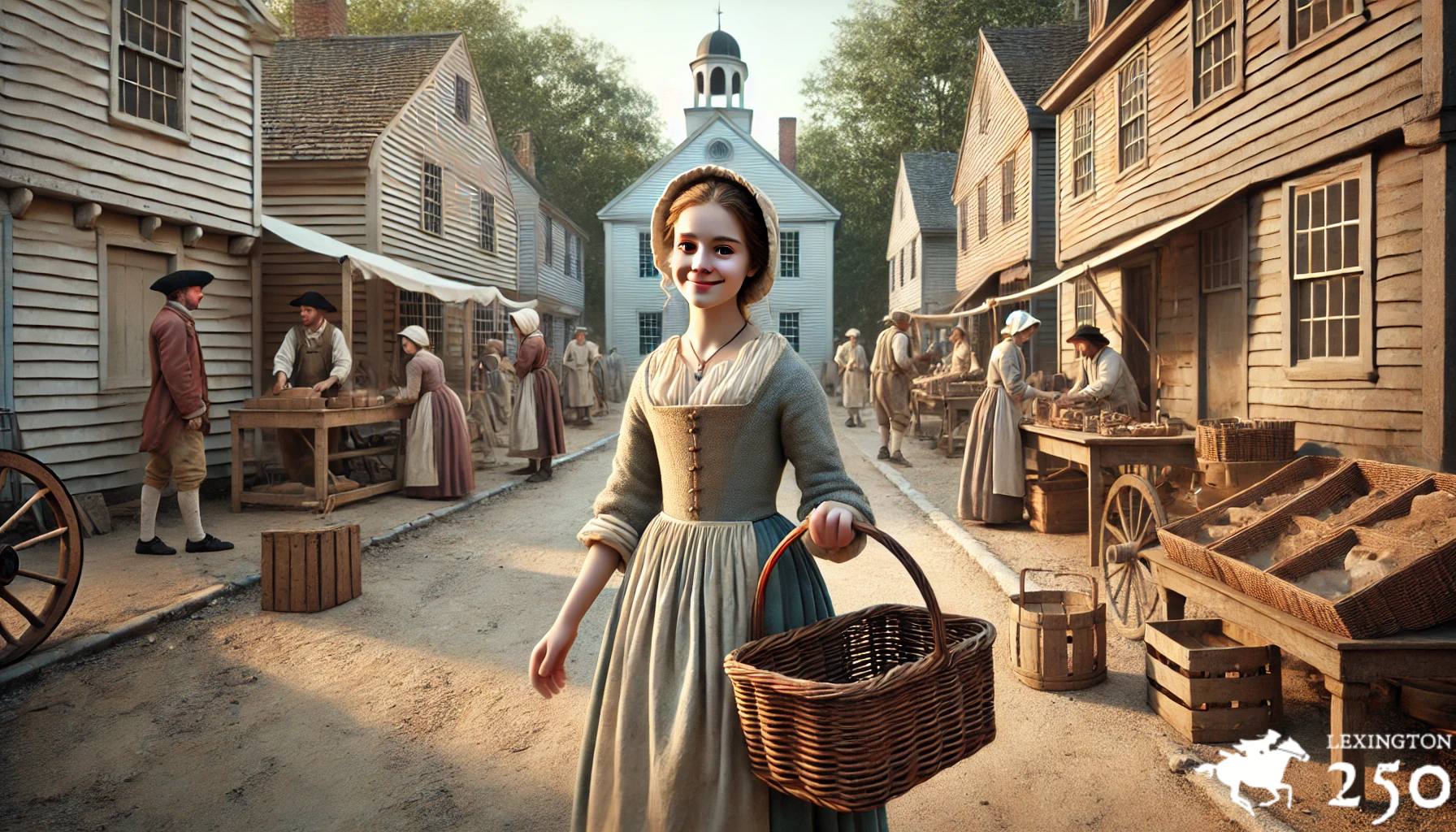
A Day in the Life in Lexington as a Teenager in 1775
The morning sun casts a warm glow over the small town of Lexington, Massachusetts. As the first light of dawn breaks through the horizon, 16-year-old Elizabeth Clarke rises from her straw-stuffed mattress, ready to begin her day. It’s the spring of 1775, and while the threat of conflict looms on the horizon, life in this quiet New England town still follows a familiar rhythm.
Early Morning Routine
Elizabeth’s day begins with the sound of her mother’s voice calling from downstairs. The Clarke family lives in a modest wooden house, typical of the era, with a central hearth that provides warmth and a place for cooking. Elizabeth quickly washes her face with cold water from the basin and dresses in her simple, homespun gown and apron. Like most teens of her time, she helps with morning chores, which include fetching water from the nearby well and feeding the chickens.
Breakfast is a hearty affair, usually consisting of porridge, fresh bread, and occasionally, if they’re lucky, some preserved meat or cheese. As they eat, Elizabeth’s father discusses the latest news from Boston, where tensions between the colonists and British soldiers are reaching a boiling point. These conversations, filled with words of patriotism and whispers of rebellion, have become increasingly common at the family table.
School and Studies
After breakfast, Elizabeth heads to the small one-room schoolhouse at the center of Lexington. Education is highly valued, though formal schooling often takes a back seat to household and farm duties. The school is a simple structure with wooden benches and a large fireplace. Mr. Johnson, the schoolmaster, teaches a variety of subjects including reading, writing, arithmetic, and the Bible.
Elizabeth enjoys her studies, particularly reading. Books are a precious commodity, often shared among families. She loves losing herself in stories of distant lands and historical figures, finding a sense of escape and inspiration. Writing is another favored activity, and she keeps a journal where she documents her thoughts and the day’s events.
Afternoon Chores and Free Time
After school, it’s back to work. The Clarke family owns a small plot of land where they grow vegetables and keep a few livestock. Elizabeth’s afternoon is filled with tending to the garden, milking the cow, and helping her mother with weaving and sewing. These tasks are essential, as they provide food and clothing for the family.
Despite the hard work, there’s still time for leisure. Elizabeth and her friends, including her best friend Mary, often gather at the village green. They play simple games, such as rolling hoops and hopscotch, or sit and gossip about the latest news. Sometimes, they’ll help prepare for the local militia drills, watching the men practice their formations and maneuvers, a stark reminder of the growing unrest.
Evening Activities
As the sun sets, the family gathers for supper. The meal is similar to breakfast, simple yet filling. After eating, they often sit by the fire, where Elizabeth’s father reads aloud from the Bible or from one of their treasured books. These moments are cherished, providing a sense of comfort and normalcy amidst the uncertainty.
Before bed, Elizabeth takes a few moments to write in her journal. Today, she scribbles about the excitement in the village over the arrival of a new shipment of tea, despite the ongoing boycotts. She also notes the growing presence of militia members, practicing more frequently as rumors of British movements spread.
Reflections
As Elizabeth lies down to sleep, she can’t help but think about the future. The world is changing rapidly, and even though she’s just a teenager, she feels the weight of it. The conversations about freedom and independence resonate with her deeply. She wonders what her role might be in this unfolding drama and what the future holds for her family and her town.
In many ways, Elizabeth’s life is typical of a teenager in 1775 Lexington. It’s a blend of hard work, education, and moments of joy with friends and family. Yet, the undercurrent of revolution is ever-present, shaping her thoughts and experiences. Through her eyes, we get a glimpse of a pivotal time in history, where ordinary lives were intertwined with extraordinary events, setting the stage for the birth of a nation.

Sabrina Bhattacharjya