
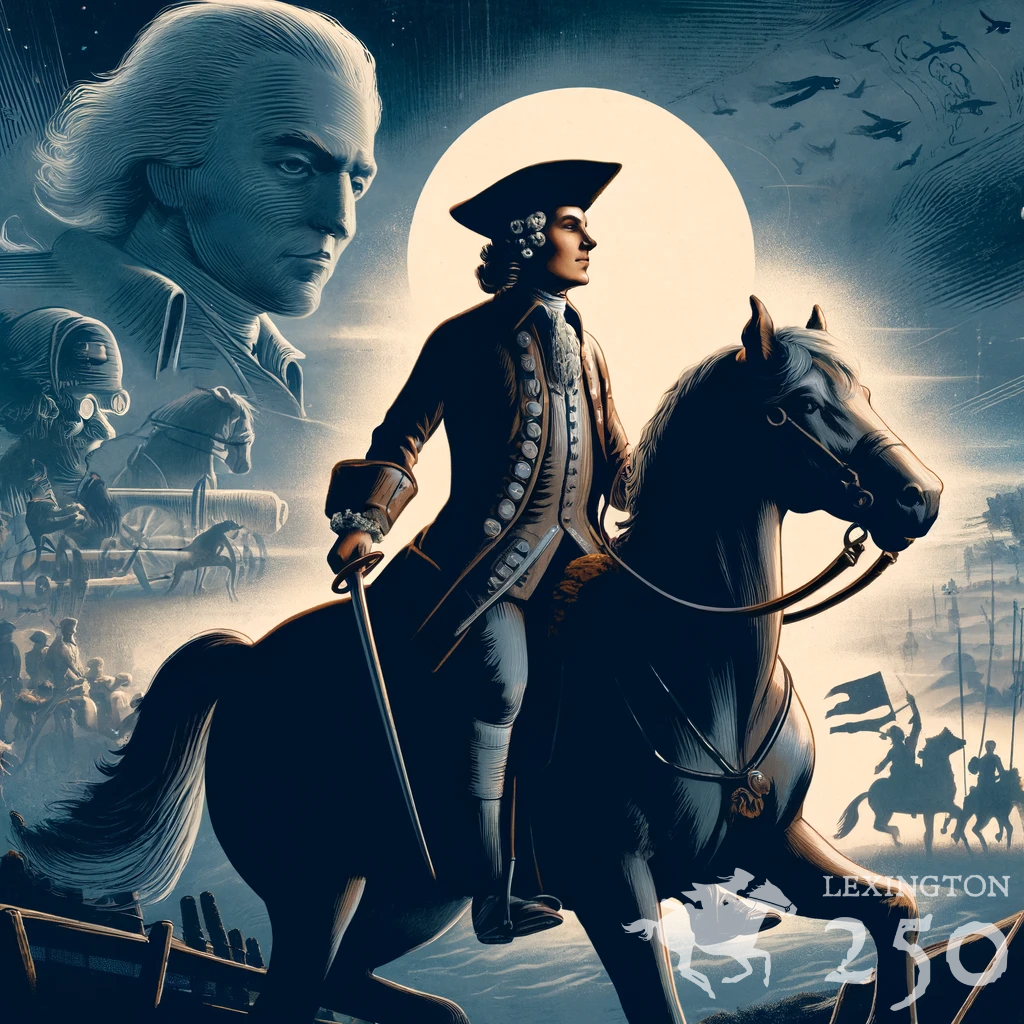
Who gets to tell history?
In the narrative of American history, certain stories shine brightly while others remain in the shadows. William Dawes, often overshadowed by Paul Revere, is a prime example of an unsung hero whose contributions were critical but underrecognized. This phenomenon mirrors the “Lost Cause” narrative that emerged after the Civil War, where selective memory and emphasis on certain figures and events shaped public perception.
William Dawes: The Forgotten Rider
While Paul Revere’s midnight ride is celebrated in history books and popular culture, William Dawes undertook an equally perilous journey on that fateful night of April 18, 1775. Dawes’ route was strategic, aiming to spread the alarm through different towns and ensuring the message of impending British attack reached as many people as possible. Despite facing similar dangers and contributing significantly to the colonial response at Lexington and Concord, Dawes’ story has not received the same level of recognition.
The Battle of Lexington and Historical Memory
The Battle of Lexington marked the beginning of the Revolutionary War, a pivotal moment in American history. However, the way we remember this event highlights the selective nature of historical memory. Just as Dawes’ contributions have been overshadowed, the narrative of the “Lost Cause” after the Civil War reshaped public understanding of the conflict. This narrative emphasized the valor of Confederate soldiers and leaders while downplaying the central issues of slavery and secession.
Understanding the Lost Cause
The “Lost Cause” was a post-Civil War ideological movement that sought to portray the Confederate cause as noble and justified. It emphasized states’ rights and Southern honor while minimizing the role of slavery as the war’s central issue. This narrative was propagated through literature, memorials, and education, shaping public perception and historical memory for generations.
The Lost Cause narrative emerged as a way for Southern states to cope with the defeat and devastation of the Civil War. It sought to present the Confederacy in a positive light, suggesting that the South fought for a noble cause rather than for the preservation of slavery. Key elements of the Lost Cause narrative include:
- Glorification of Confederate Leaders: Figures like Robert E. Lee and Stonewall Jackson were celebrated as paragons of virtue and military skill.
- Heroism of Confederate Soldiers: The bravery and sacrifice of Confederate soldiers were emphasized, often romanticizing their struggles.
- States’ Rights Over Slavery: The narrative argued that the primary cause of the war was states’ rights and Southern independence, not slavery.
- Depiction of the Antebellum South: The South was portrayed as a place of genteel civilization and harmonious relations between masters and slaves.
Drawing Parallels: Dawes and the Lost Cause
Both the untold story of William Dawes and the “Lost Cause” narrative illustrate how history is often written by the victors or those with the loudest voices. In Dawes’ case, the focus on Revere’s ride has overshadowed his equally important role. Similarly, the “Lost Cause” narrative redefined the Civil War in a way that glorified the Confederacy and obscured the true causes and consequences of the conflict.
The Importance of Inclusive History
Recognizing William Dawes’ contributions alongside Paul Revere’s is crucial for a more inclusive and accurate historical narrative. Just as we must critically examine and challenge the “Lost Cause” narrative, we must also strive to bring to light the stories of lesser-known figures who played significant roles in shaping our history. By doing so, we honor the full spectrum of our past and ensure that all contributions are acknowledged and remembered.
Conclusion
The story of William Dawes serves as a poignant reminder of the complexities of historical memory. History is not solely the domain of scholars and historians; it is a collective responsibility. By embracing a more inclusive narrative and striving for truth, we honor all those who fought for freedom and justice, ensuring their legacies inspire future generations. It is our duty to tell the full story, recognizing the contributions of all who shaped our past. We must commit to telling the truth, acknowledging both the celebrated and the overlooked, to ensure a complete and honest recounting of our shared history. To learn more about William Dawes, check out here. Don’t forget to follow us on Instagram at @lexington250!

Sabrina Bhattacharjya